


Latest News
 Recently announced by Square Enix is the exclusive North America pre-order incentive for Hitman: Absolution. Pre-order Hitman: Absolution through GameStop and receive the stand-alone Hitman: Sniper Challenge beginning May 15. Hitman: Sniper Challenge follows Agent 47 on an ... [read more]
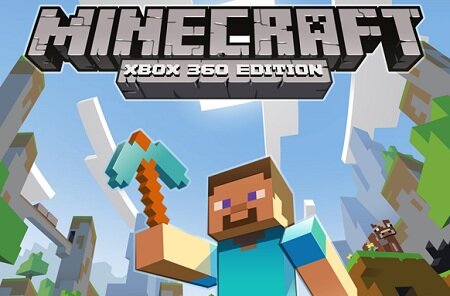 With over 100,000 copies sold and over 400,000 unique player entries on the scoreboard, Minecraft: Xbox360 Edition on Xbox Live Arcade became profitable in just an hour of its release. The adventure game Minecraft: Xbox360 by Mojang was released on May 9 and broke the previo... [read more]
 If you think Batman had it rough at the end of Arkham City, wait till you see how Harley Quinn is taking it. ... [read more]
Latest Articles
 With the huge success of the Double Fine Kickstarter project that raised over $3 million, game developers flocked to Kickstarter in hopes that their game would become the next crowd funding success story. One such developer is Sandswept Studios with their game, The Dead Lin... [read more]
 If you're playing a fighting game for the story, you're doing it wrong.... [read more]
 Gamestop settled on a lawsuit regarding the sale of used games that are missing DLC. Is this lawsuit a win for gamers or will this cause more problems for gamers? ... [read more]
Latest Reviews
 As the fighting game revival continues to bloom, a small indie company is looking to shake-up the genre. Can Skullgirls, a fighting game for fighting game fans by fighting game fans, hang with the big boys?... [read more]
 Sine Mora is a side scrolling shoot'em up title that borrows heavily from past titles in the genre such as the cult classic Einhander. The premise involves war torn characters battling a bigger threat as you shoot down enemies and gigantic bosses in your little plane. Althou... [read more]
 The Walking Dead TV series became a successful adaption of the popular comic book. Can The Walking Dead Game be just as successful?... [read more]
Latest Videos
 In the mid 1970s Gary Whisenhunt and Ray Wood created one of the earliest computer roleplaying videogames, dnd, which also happened to be one of the first "fan games". Although little known today, their work pre-dates much better known series like Ultima, Wizardry and Dragon... [read more]
You might know this game as Secret of Mana 2, but this video is titled by the only name it was officially released as. This was a Japan exclusive game in the Mana series that many people aren't aware existed, but let's change that starting right now!... [read more]
Gamestop settled on a lawsuit regarding the sale of used games that are missing DLC. Is this lawsuit a win for gamers or will this cause more problems for gamers? ... [read more]
In the mid 1970s Gary Whisenhunt and Ray Wood created one of the earliest computer roleplaying videogames, dnd, which also happened to be one of the first "fan games". Although little known today, their work pre-dates much better known series like Ultima, Wizardry and Dragon... [read more]
You might know this game as Secret of Mana 2, but this video is titled by the only name it was officially released as. This was a Japan exclusive game in the Mana series that many people aren't aware existed, but let's change that starting right now!... [read more]
Gamestop settled on a lawsuit regarding the sale of used games that are missing DLC. Is this lawsuit a win for gamers or will this cause more problems for gamers? ... [read more]

After taking a look at how different each market is and realizing that their current strategies are no longer working, Nintendo does recognize that change in their methods are needed in order for them to be profitable in this new fiscal year. In this part of the financial results briefing, Iwata lays out Nintendo’s prospects for this fiscal year. Now this section will be split into two parts: 1) Nintendo’s sales forecast for all of their major hardware/software and 2) Plans for the Wii U leading into E3 and beyond. He does mention the 3DS in this part of the briefing, but what is said there will be combined with our looking into the company keeping the success and profitability of the system snowballing into the new fiscal year. For now let’s take a look at their projected sales forecasts for their hardware/software.

The chart above lists the projected sales forecasts that Nintendo hopes to achieve in the new fiscal year. Before we go on, I want to explain how the units are calculated. At first glance these numbers may look low, but they are not. These units are counted by ten thousands. For example 250 multiplied by 10,000 will equal to 2.5 million units. Reading 250 on a chart is much easier and saves space than seeing the whole number of 2,500,000 million on the chart. I will however using short hand to help make things clear (example: 2,500,000 = 2.5 million). Now that’s out of the way, we can continue starting with the 3DS.
As it was reported this past week, the 3DS managed to move 13.53 million units in its first year of release. This made the 3DS not only Nintendo’s fastest selling console, out selling both the DS and the Game Boy advance, but the fastest selling console over all worldwide. Sales still continue to grow globally as more games are starting to come out in a more timely fashion and with the bundling of games like Super Mario Land 3D to 3DS units. Due to this increase of sales, Nintendo has projected that they will move 18.50 million units. The reason for only a 5 million unit increase is that Iwata has acknowledged that the momentum of the 3DS overseas isn’t what he anticipated.
As for software, Nintendo managed to push 36 million units of a variety of games. 12 million of those units sold were from the three most popular 3DS games, Super Mario Land 3D (5.03 million), Mario Kart 7 (4.54 million), and Ledged of Zelda Ocarina of Time (2.49 million). This shows that Nintendo is slowly starting to put the importance of 3rd party companies on the same level as their 1st party brand. This will be important when we talk about their maintaining this momentum. The same can’t be said for the DS hardware.
Before the announcement and release of the 3DS, the current model of DS, the DSi, was performing very successfully with a wide range of critically successful games. Once the 3DS came into the picture and almost every store was running a “trade in your old DSi for a 3DS” promotion, DS sales started to slow down. While in some markets like the US, the DS still continued to sell pretty well, and there are markets like Japan which almost completely abandoned the system. The DS did still well, just not with the numbers like used to. In this past fiscal year, the DS only managed to push 5.1 million units. Which is only about half of what the 3DS pushed

